The Feel of a Word: sliprails
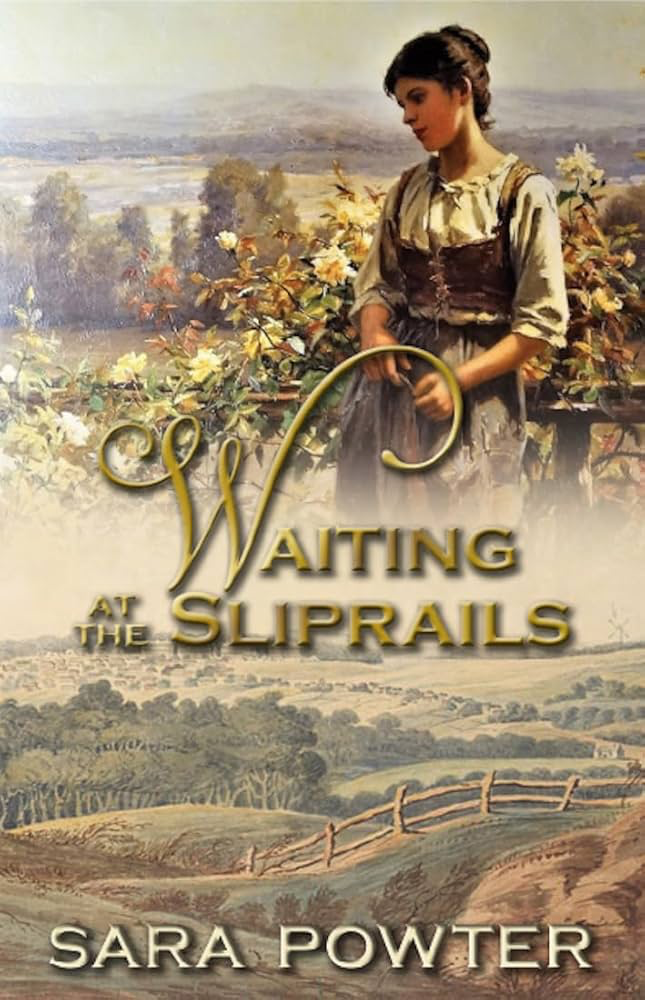
In colonial times the sliprails came to represent the boundary between the house which represents domesticity and security and the wide world outside which offered adventure but also danger. Women were confined to the house and garden while men rode out into the world and hopefully returned, their mission accomplished.
The sliprails therefore became the locus for farewells and greetings. Since a horse and rider would find it tedious to manage the rails, someone was usually requested to go ahead and take them down as the rider departed, and put them back in place once the rider was gone.
This kind of makeshift gate with rails that slip in and out of fence posts seems to have been an Australian invention. There is a tiny bit of evidence that the Americans had slip bars or slip rails, but the rest of the world seems to have relied on gates.
So often in Australian poetry and bush stories it is the lovers who say goodbye at the sliprails. The image is of the horse and rider disappearing around the spur while the faint white form can be seen long after standing by the rails. And then there are the arrangements made for the lover’s return. In one poem by Henry Lawson the young woman just hopes:
In winter bleak and summer brown,
She’d steal across the little run,
And shyly let the sliprails down,
And listen there when darkness shut
The nearer spur in silence deep,
And when they called her from the hut
Steal home and cry herself to sleep.
But other lovers made more definite arrangements:
“Cheer up Mary!” he said. “I’ll tell you what I’ll do – when I come back I’ll whistle when I reach the Spur and you be here to let the sliprails down for me. I’ll time myself to get here about sundown. I’ll whistle ‘Willie Riley.’ So you’ll know it’s me. “
Henry Lawson The Romance of the Swag
There are many references to the girl by the sliprails, to the horse that has worn a bare patch in the ground standing by the sliprails while the lovers converse, to the elusive white figure left standing by the sliprails as the horse and rider gallop away.
Blue-eyed maiden waiting
By your slip-rail bar,
Brown-faced comrade riding
West by sun and star!
Coo-ee! Coo-ee!
Hear us from afar.
Coo-oo-oo-ee!
The sliprails made a certain noise when they were taken out of the posts and dropped on the ground. The clatter of the sliprails served to warn the inhabitants of the house that someone was approaching, rather in the same way that a squeaky gate tells you that someone is coming. Henry Lawson wrote a poem about a bushranger who comes to a bush dance to be with his lover, May Carney. The alarm is given that the troopers are in the gully. May attempts to divert them:
She ran to the gate, and the troopers were there —
The jingle of hobbles came faint on the air —
Then loudly she screamed: it was only to drown
The treacherous clatter of slip-rails let down.
In this vignette we see the sliprails from the domestic side:
Mother and Sal ironing, mopping their faces with a towel and telling each other how hot it was. The dog stretched across the doorway. A child’s bonnet on the floor, the child out in the sun. Two horsemen approaching the slip-rails.
In this next quote we have a young woman who has complete disregard for the sliprails just as she has complete disregard for the conventions that dictate how a young woman should behave.
She unhitched Bright Blade’s reins and sprang into the saddle. “Well, that’s how it goes. See you tomorrow!’ And she gave her horse a light affectionate cut across his sleek rump as she set him into a gallop across the paddock towards the sliprails.
“Oh, Hope’s going to jump!” cried Dimity, springing up on to the verandah for a better view. As she did so, Bright Blade, gathering himself for an instant into a shining catapult of hard packed muscle, suddenly rose fully extended, and skimmed over the slip rails in a beautiful arc.”
Hope acquires a young man who is very disapproving of her jumping over the sliprails. Hope argues that it is a practical measure that builds in some jumping practice into her daily routine and her father and brother have never said anything to stop her. But she feels oppressed by this male view that she shouldn’t.
Henry Lawson is also responsible for the concept of the ‘golden sliprails’ that give access to Heaven after death. The pious hope was expressed at Lawson’s funeral that the golden sliprails would open for him. The occasional horse was welcomed through the golden sliprails as well. It was said that there was a headstone just outside Casino with the following epitaph:
Here lies buried ALICK , son of Sirius. Died 22nd March, 1909. A champion hunter in many contests, With never a swerve nor a baulk. As he lived, so he died – game! Then put the golden slip-rails down, And let old Alick in.
I imagine there are very few sliprails left. They were cumbersome but they had a significance for colonial Australians that went beyond their practical purpose.