mutations, variants and strains

The use of the term mutant in biology is neutral. It just means that there has been a change in the genome of a living thing. Such mutations occur commonly, especially in viruses, and, for the most part, are harmless in that they are unsuccessful.

Read More
Sue ButlerComment
level and levy

There are two expressions which are confusingly close. One is to levy a charge against someone. The other expression is to level a charge against someone.

Read More
Sue ButlerComment
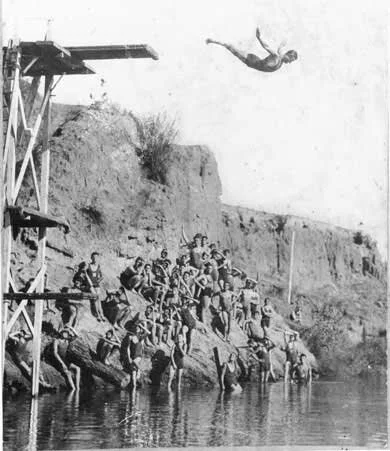
swan dive

It turns out that the British talk about a swallow-dive with reference to the shape that a diver makes in the air, back arched, feet together and arms outstretched, before entering the water. The resemblance to a swallow diving through the air is clear.

Read More
Sue ButlerComment
variegated or varied?

I was listening to an interview in which the speaker mentioned a variegated response to a proposal. This struck me as odd. I would have expected varied, not variegated which I think of as relating to patterns of colour.

Read More
Sue Butler Comment
euthanise and euthanise

The discussion triggered by the unfortunate death of a horse in the Melbourne Cup produced instances of both these forms. I have to admit that euthanase is more familiar to me but that is a sign of my age. It seems that euthanase is an Australianism. Everyone else in the world uses the form euthanise.

Read More
Sue Butler Comments
lessons and learnings

There is a subtle distinction to be made between a lesson and a learning, one which was clearly recognised by educators in the 20th century who placed great store on the learning process and the learning set which students needed to have to acquire lasting knowledge.

Read More
Sue ButlerComment
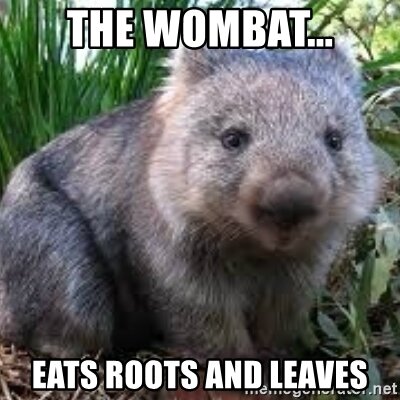
Eats, roots and leaves

It occurred to me, slightly late in the day, that it is only Australians and New Zealanders who would have found this a slightly salacious joke title. This is because we have the meaning of root which is labelled coarse in the OED, that is, ‘to have sexual intercourse’.

Read More
Sue Butler Comment
bully pulpit

The term bully pulpit is, I would think, still not a term that Australians readily understand. It was originally coined in the early 1900s when Americans were familiar with the adjective bully meaning ‘excellent, outstanding’.

Read More
Sue ButlerComment
conscious and conscience

The Anglican Archbishop of Sydney, Dr Glenn Davies, was reported as saying that he had ethical objections to the Oxford vaccine because it used cell lines from an electively aborted foetus. Dr Davies was reported as saying: I probably would [wait for an alternative vaccine] but that would be a personal decision of mine and not a decision that I would bind anyone’s conscious with’.

Read More
Sue ButlerComment
Coon cheese

Coon cheese is a popular cheddar in Australia, but its name is derived from an American parent company in Philadelphia. Coon cheese was developed by a new process which matured the cheese at a faster rate than usual by keeping it in high heat and humidity.

Read More
Sue Butler Comments
Twitter adjusts its language

One of the reactions to the Black Lives Matter movement is a desire to clean up the hidden and taken-for-granted racism in our language. Twitter has announced that it will change its house style to remove master and slave from its texts.

Read More
Sue ButlerComment
eradicate and eliminate

To eradicate a plant is to pull it out by the root which, as every gardener knows, is the best way of making sure that it never grows again.  To eliminate something is, in its literal sense, to throw it out.

Read More
Sue ButlerComment
pootling along

I had never heard this expression so I was quite prepared to believe it was British slang acquired by the speaker when she lived in London in the 1980s. It does indeed turn out to be British English.

Read More
Roiling meanings

I don’t know when roiling became a thing that stock markets do but they clearly have possession of the word now. The word seems to be an Anglo-French borrowing in the period of the Norman Conquest and is related to the word to roll.  

Read More
Sue ButlerComment