tiny forest
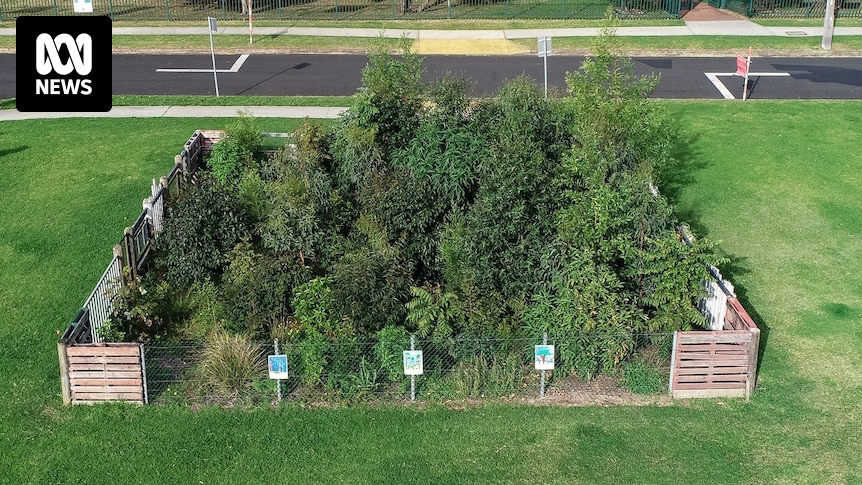
Once upon a time we had tiny tots, and being tiny was cute and probably childish. Now it is serious business. We have tiny houses and the tiny house movement. And now we have the tiny forest which can be planted in a space as small as a car parking spot.
In an urban environment it can be a problem to find spaces for greenery, even though we know it pulls the temperature down. The trees and shrubs we finally get to grow in possibly unforgiving terrain can take a while to mature. In the 1970s Dr Akira Miyawaki, a Japanese botanist and plant ecologist, discovered that urban greening can be accelerated by enriching the soil and growing plants in a dense planting structure. Being side by side in this way they grow up as fast as they can, possibly ten times faster than usual for urban greenery. The plants chosen are a varied mix. The resultant mini-ecosystem increases biodiversity and reduces the need for maintenance. The tiny forest looks after itself and is a welcome oasis for wildlife in the middle of the city.
In Australia the Miyawaki method has been adapted to suit the Australian environment. The soil is prepared with compost and water-retaining material, and a special ‘tea’ of bacteria collected from nearby natural bushland. The plants chosen are the ones that would have grown in that location before it was cleared.